Tapestry is the slowest image-making: a picture built stitch by stitch, like a painting that took a season. This set of five crochet handbag concepts carries five botanical tapestries — olive branch, thistle, ginkgo, wheat and eucalyptus — each plant matched to the bag that suits its character. All images are AI-generated concept illustrations for inspiration, not photos of finished handmade pieces.
Botanical tapestry bags are worn gardens: the plant must survive being seen at walking speed, so silhouette matters more than detail. When comparing the five, watch how each plant's gesture — droop, spike, fan, sheaf, sprig — becomes the bag's posture.
Cream olive branch crochet shoulder bag
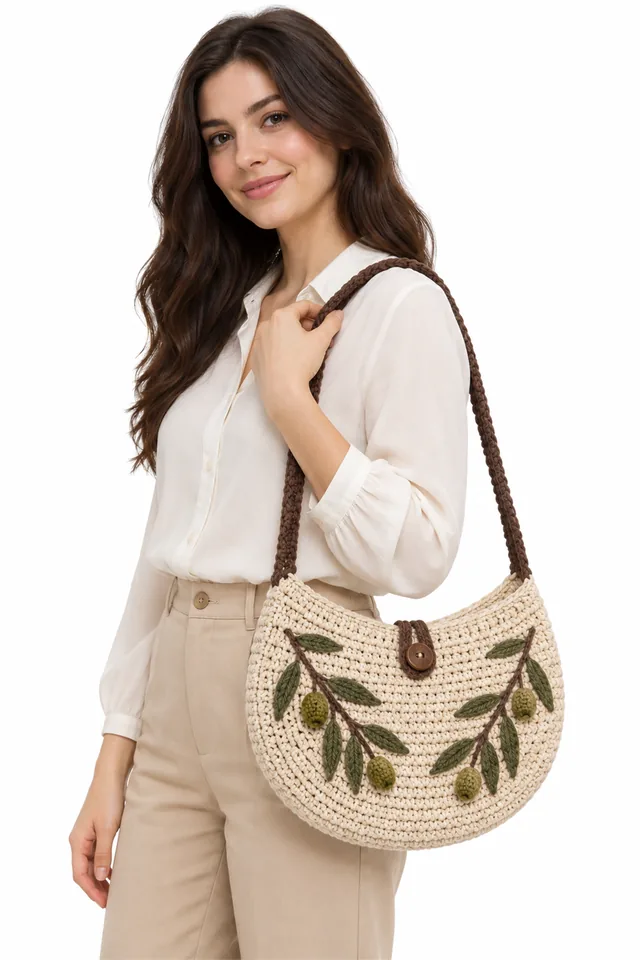
The cream olive branch shoulder bag is the peace offering of the set — a soft cream field with one slender olive branch worked in silvery greens, leaves paired along the stem. It is quiet luxury: a bag that whispers Mediterranean.
An olive branch is the gentlest botanical gesture: a slight arc, small leaves, nothing spiky. On a shoulder bag worn daily, that gentleness matches everything in the wardrobe.
For a mood board, this bag shows single-branch composition: one stem, well placed, beats a bouquet. On cream, restraint is the luxury.
Compared with the thistle, the olive is softness where the thistle is defense. As with every image here, treat this as an AI-generated concept for inspiration, not as a pattern.
Lilac thistle crochet handbag
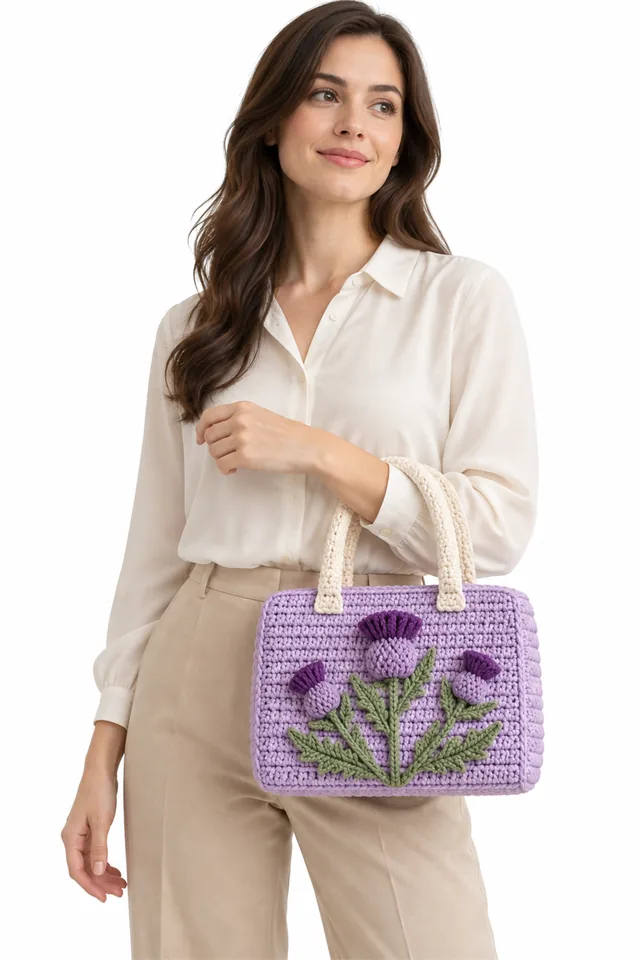
The lilac thistle handbag is the highlands of the collection — a proud thistle head in purple-green rising from a lilac field, spiky bracts and all. The thistle is Scotland's emblem, and the bag carries that fierce dignity.
A thistle's geometry is crown-like: pointed bracts around a tuft. As a tapestry motif, it reads as a natural crest — heraldry drawn by a meadow.
For a mood board, this bag demonstrates spiky motifs on soft grounds: lilac flatters purple-green the way mist flatters moors. Pair the fierce plant with the tender color.
Set beside the olive bag, the thistle is defense where the olive is peace — two national flowers, two temperaments. The image remains an AI concept for character and palette inspiration only.
Navy ginkgo leaf crochet clutch
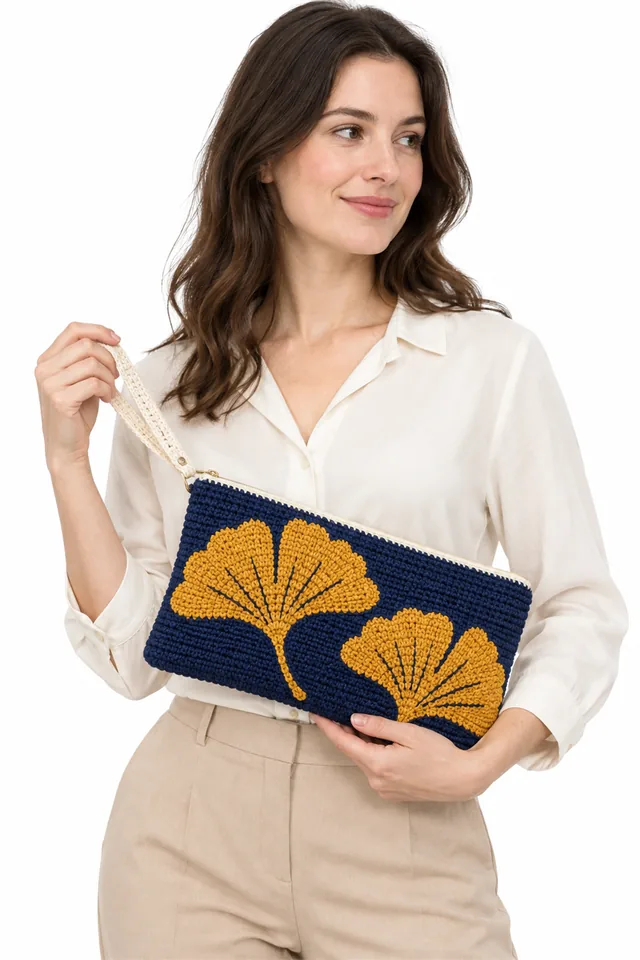
The navy ginkgo clutch is the evening of the set — golden fan-shaped ginkgo leaves scattered on deep navy, like the tree's famous November rain caught at night. It is the most formal of the five, and the most graphic.
A ginkgo leaf is a perfect fan with a split tip — a silhouette no other plant owns. In gold on navy, the motif needs no detail: shape and contrast do everything.
For a mood board, this clutch shows metallic-on-dark as eveningwear logic. Gold leaves on navy work like brass on midnight — formal without effort. Reserve your brightest motif for your darkest ground.
Next to the wheat satchel, the ginkgo is the city evening where the wheat is the country morning. As always, this is an AI-generated concept image: borrow the fan, not the construction.
Rust wheat sheaf crochet satchel
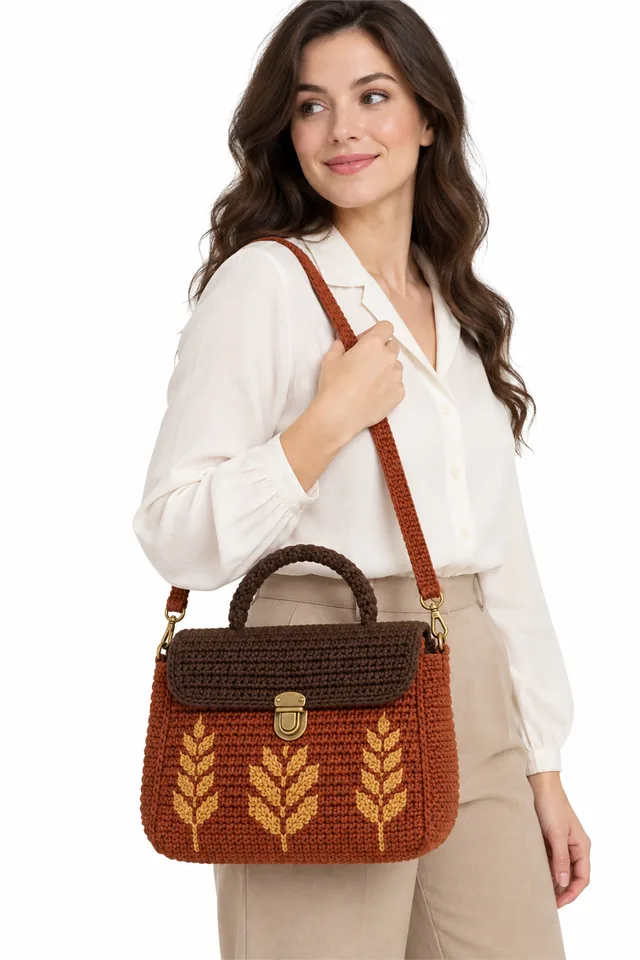
The rust wheat sheaf satchel is the harvest of the collection — a bound sheaf of golden wheat worked across a warm rust field, every stalk leaning the same way like grain in wind. It is abundance you can carry.
A sheaf is already a composition: many stalks, one binding. As a tapestry motif, it brings built-in rhythm — repeated lines with a single accent where the tie sits.
For a mood board, this satchel demonstrates harvest palettes: rust, gold and wheat-cream are autumn's wardrobe. A harvest bag pairs with boots, wool and everything September owns.
Compared with the eucalyptus tote, the sheaf is gathered plenty where the eucalyptus is drifting ease. Both are AI-generated concept images for inspiration, not patterns.
Sage eucalyptus panel crochet tote
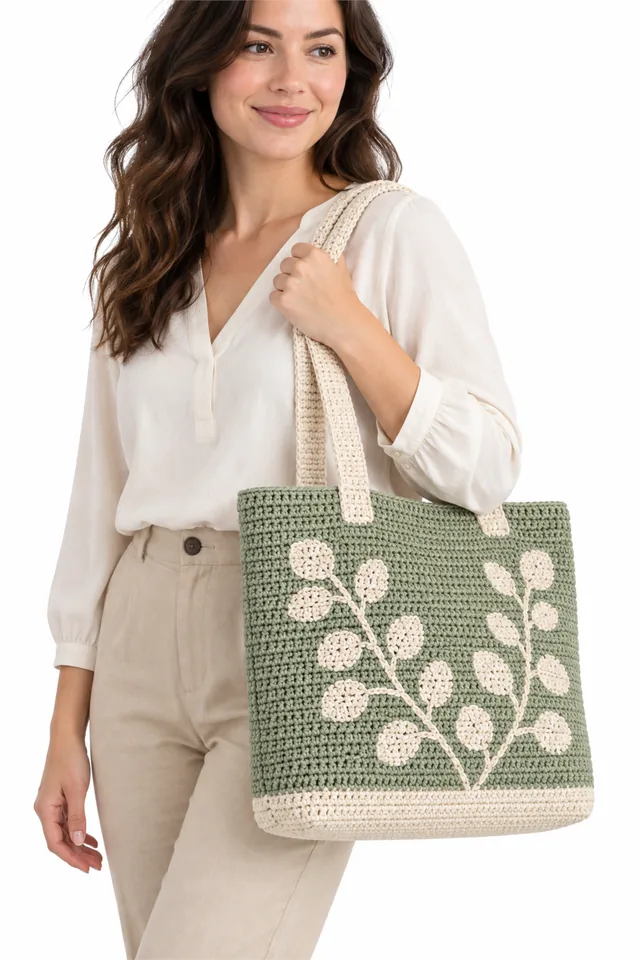
The sage eucalyptus tote is the spa morning of the set — round silver-green eucalyptus leaves trailing down a sage panel, cool and calm as steam in a quiet room. It is the bag for market runs that feel like walks.
Eucalyptus leaves are discs on a stem — the simplest botanical repeat there is. In tapestry, that means pure rhythm: circle, circle, circle down a line.
For a mood board, this tote shows green-on-green as serenity. Sage on sage with silver shifts is tone-on-tone at its most restful. When the palette is calm, the bag becomes a resting place for the eye.
Set against the ginkgo clutch, the eucalyptus is daylight calm where the ginkgo is night glamour. All five images are AI-generated concepts for inspiration only, not patterns or product photos.
A garden in the hand
These five bags carry five plants — olive, thistle, ginkgo, wheat and eucalyptus — each chosen for the gesture it lends: peace, pride, glamour, plenty and calm.
When planning botanical tapestry bags, choose the plant for its silhouette first. A bag is read at a glance; the motif must survive the glance.
All five images are AI-generated concept illustrations. They offer ideas for motif, texture and palette, but they are not photographs of finished crocheted pieces and include no patterns or instructions. Use them as a springboard for your own botanical mood board.
Read how we present crochet inspiration or send a suggestion or correction.