Where flowers meet tiny animals: these five mini crochet amigurumi concepts bloom — a dinosaur with a floral spine, a cat asleep in wisteria, an elephant with butterfly ears, an axolotl in blossoms and a snail with a garden shell. All images are AI-generated concept illustrations for inspiration, not photos of finished handmade pieces.
Floral amigurumi succeed when the flowers feel grown rather than glued on: a spine of blooms, a wreath, wings of petals. Each concept here integrates its flowers differently — that variety is the real collection.
Mint dinosaur with flower spine
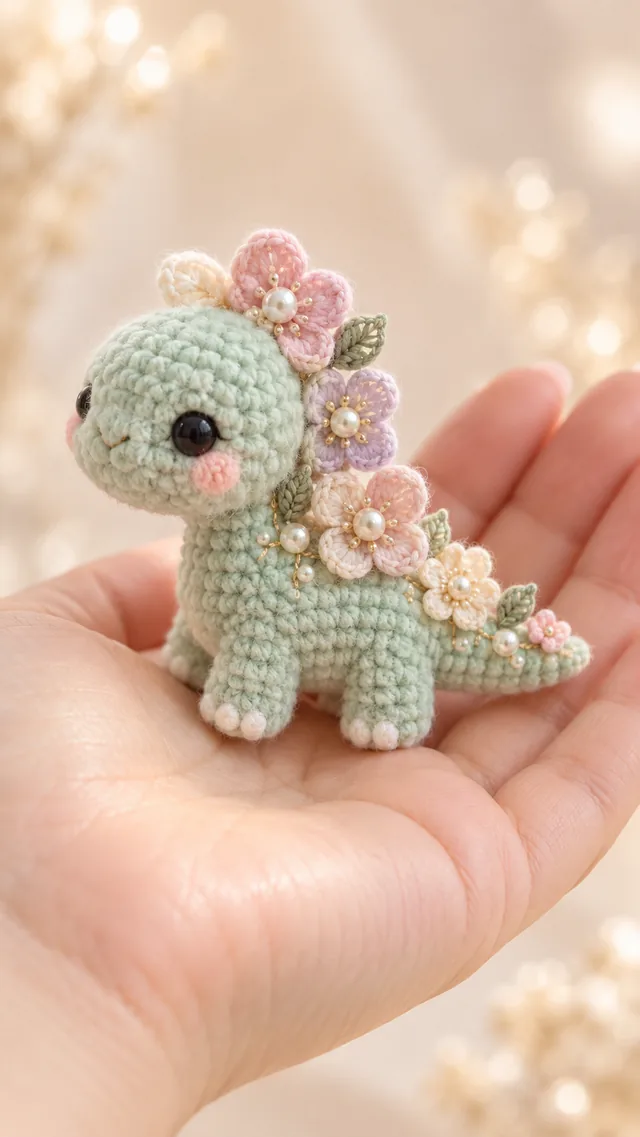
The mint dinosaur carries pink blossoms along its spine where plates or spikes would normally be — a stegosaurus reimagined as a garden. It is paleontology rewritten by a florist.
Replacing spikes with flowers is a brilliant softening move: the silhouette stays dinosaur, the texture becomes bouquet. Substitution is one of design's sharpest tools.
For a mood board, spine decorations are a natural flower placement on any long-backed animal. The body provides the stem; the imagination provides the blooms.
Compared with the wreath-framed cat, the dino wears its garden on its body rather than around it. Two botany strategies. This is an AI concept image, not a pattern.
A mint dinosaur carrying flowers is the gentlest possible contradiction: prehistoric scale, garden-party manners. It is the plush for spring birthdays and anyone who thinks ferocity is overrated.
Lavender cat sleeping in a wisteria wreath
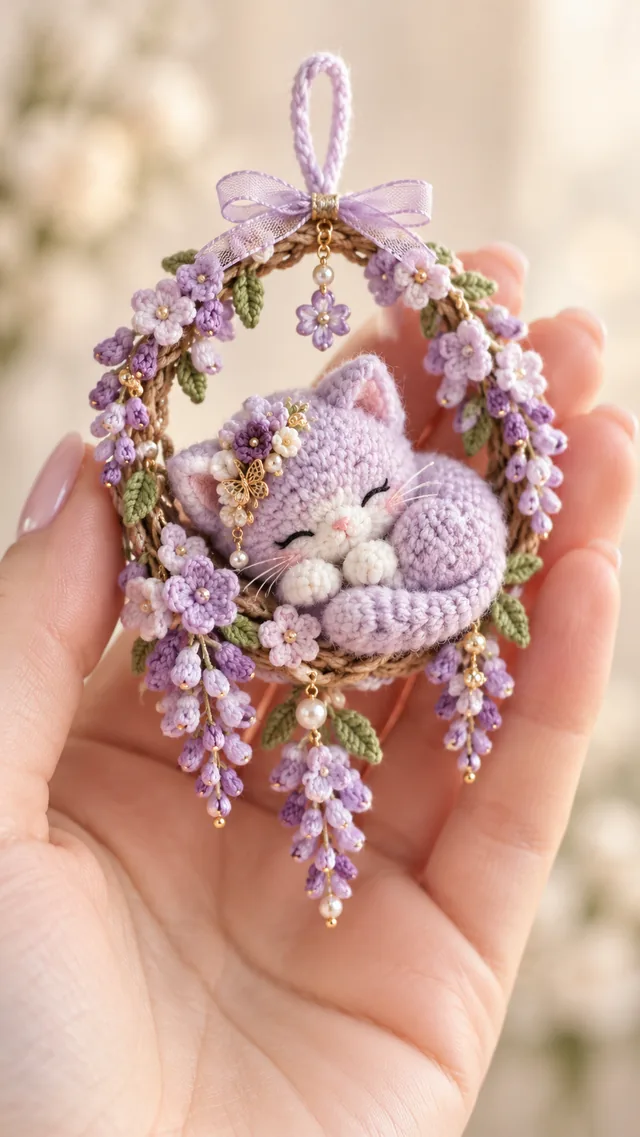
The lavender cat sleeps curled inside a ring of wisteria, eyes closed, utterly at peace — a portrait of exactly where every cat believes it belongs. The wreath makes the piece half amigurumi, half hanging ornament.
Wisteria's drooping clusters give the frame a natural asymmetry, and the lavender-on-lavender palette reads as a single breath of calm.
For a mood board, wreath frames double an amigurumi's display options: shelf or hook. Designing a character with its own frame is designing its presentation at the same time.
Next to the spine-flowering dino, the cat is framed by flowers rather than fused with them. Garden as setting versus garden as body. An AI-generated concept, inspiration only.
The lavender cat in its wisteria wreath is the most romantic piece of the set — a portrait more than a toy. It suits shelves and dressers, anywhere a small violet moment of calm is needed.
Butterfly-winged elephant
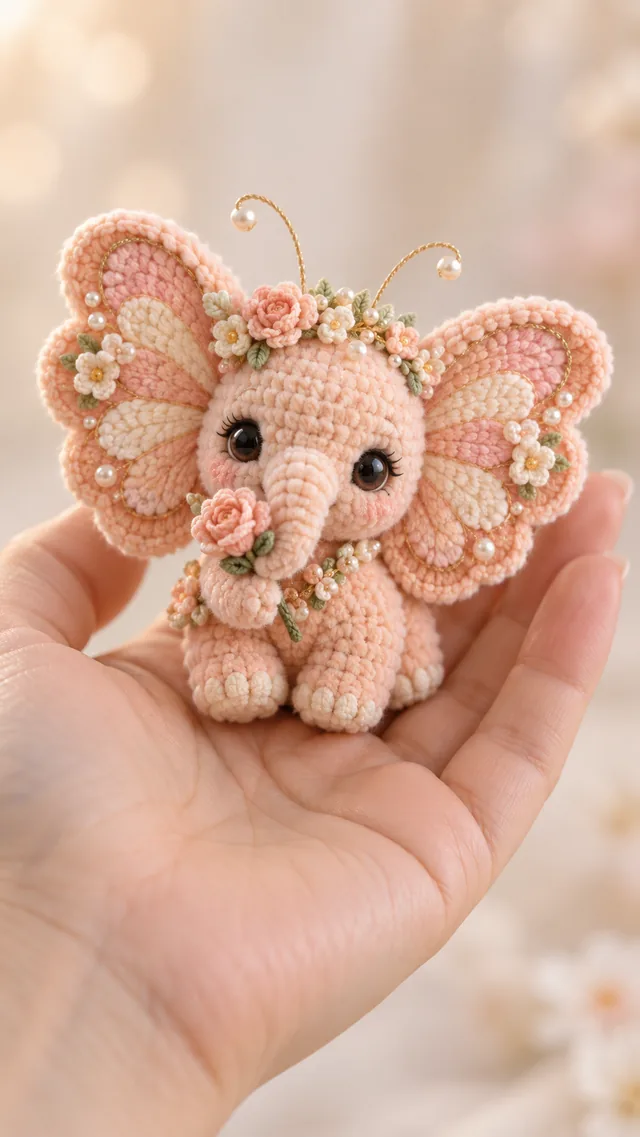
The peach elephant's ears have become butterfly wings — vast, petal-edged, impossible and delightful — with tiny blossoms crowning its head. It is the most fantastical concept of the five.
Elephant ears were always wing-shaped; the design simply admits it. Hybrid creatures work when the swap honors the original anatomy.
For a mood board, ear transformations are high-impact because ears frame the face. Change the ears and you change the species' whole story.
Against the sleepy cat, the butterfly elephant is wide-eyed wonder — fantasy at full volume. As always, an AI concept for inspiration only.
An elephant with butterfly wings is pure nursery logic: the heaviest animal, granted flight. It is the gift that says impossible things softly, in pastel, with a trunk.
Pink axolotl with cherry blossoms
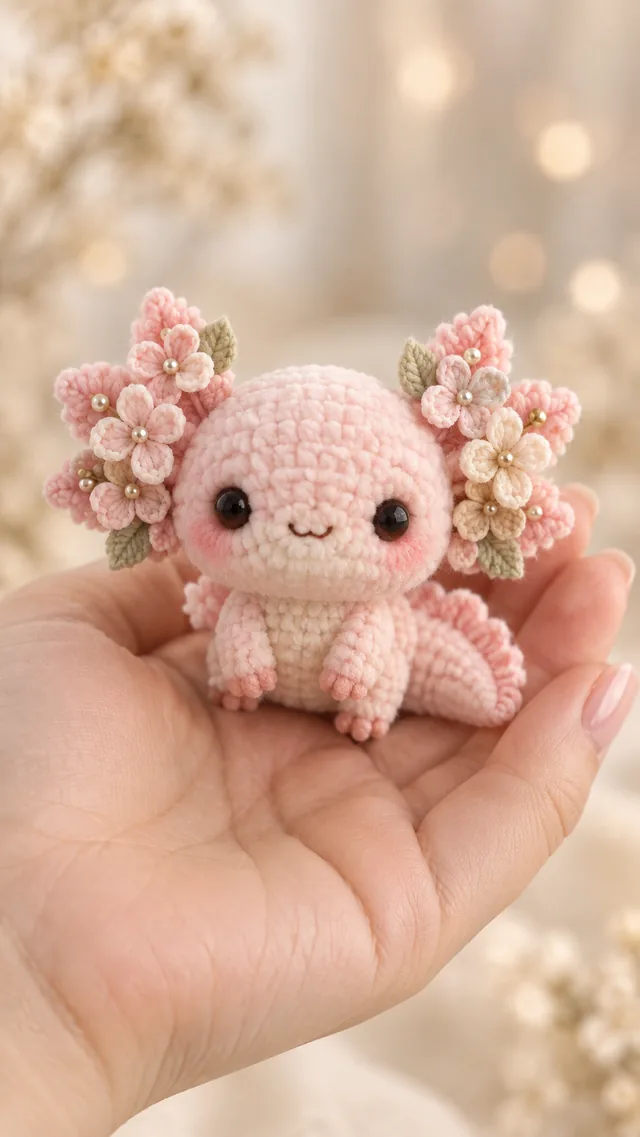
The pink axolotl — already nature's most amigurumi-shaped animal — wears cherry blossoms at its external gills, as if spring grew directly from its head. The species and the flowers share the same pink.
Axolotl gills are flower-shaped to begin with, so adding blossoms is less decoration than emphasis. The best designs notice what nature already sketched.
For a mood board, when animal and flower share a palette, the figure reads as a single organism — camouflage as charm. Color unity is a quiet superpower.
Compared with the transformed elephant, the axolotl is amplified rather than hybridized. Two ways flowers can meet an animal. This is an AI concept image, not a pattern.
The axolotl is the internet's beloved amphibian, and with blossoms it leans fully into its permanent smile. Pink on pink keeps it soft; the flowers make it a tiny ambassador of the strange and sweet.
Lilac snail with a glass garden shell
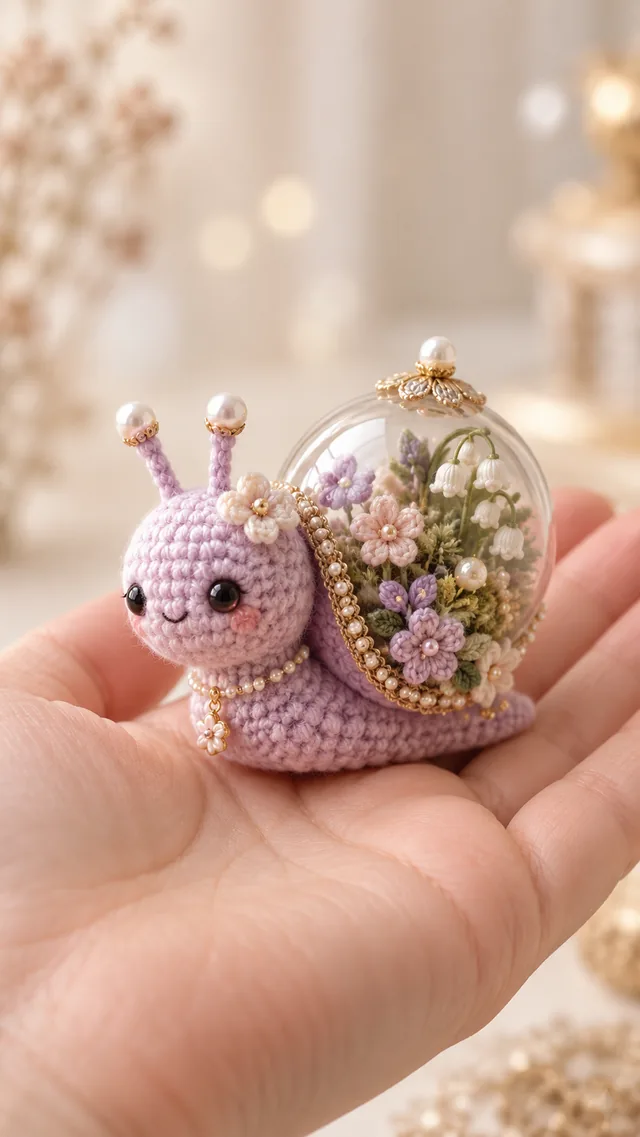
The lilac snail carries a garden on its back — its shell reimagined as a tiny glass dome with miniature blooms inside, like a terrarium on the move. It is the most inventive concept in the set.
The dome shell is a story in one object: this snail does not just live in the garden, it brings the garden. Props that reframe the animal's defining feature are miniature genius.
For a mood board, container shells — dome, basket, house — turn slow animals into travelers with luggage. The shell is a blank canvas asking for a theme.
Set beside the flower-spined dino, the snail carries its garden while the dino grows its own. Portable versus planted. An AI-generated concept, inspiration only.
The snail carrying a garden on its shell is the set's quiet masterpiece — slow travel, with flowers. It is the plush for gardeners, daydreamers, and anyone who believes home should come with you.
Five ways to bloom
Spine, wreath, ears, gills, shell: five animals, five places for flowers to live. The collection's real subject is integration — blooms that belong to the body rather than sit on it.
These are AI-generated concept images made for inspiration, not photographs of finished amigurumi, and they include no patterns. Let them seed your next small project with petals.
Read how we present crochet inspiration or send a suggestion or correction.